
Larisa L. Gerver
Professor of Analytical Musicology Department
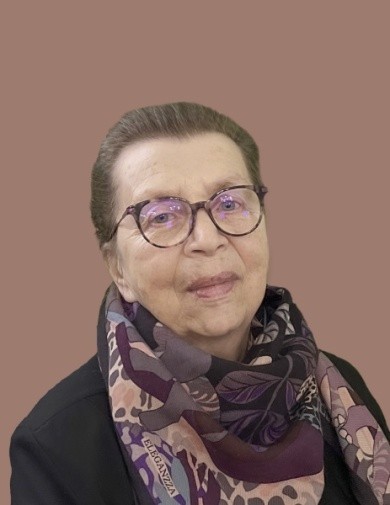
Biography
In 1965 she graduated from the Hamza Tashkent Music College, and in 1969 from the Gnesin State Music and Pedagogical Institute (now the Gnesin Russian Academy of Music), where her teachers included A. G. Chugaev, R. K. Shirinyan, and F. G. Arzamanov.
In the 1980s, while teaching at the Gnesin Institute, she studied with R. V. Duganov, who taught theory and literature there, and since 1970 she has been on the teaching staff of the Gnesin Institute (now Academy).
Her graduates include the Doctor of Art History R. Chernaya and Candidates of Art History N. I. Enukidze, A. V. Lebedeva, N. I. Svetlakova, among others.
She is the author of the book «Music and Musical Mythology in Russian Poetry of the Early Twentieth Century» and over one hundred scholarly articles.
Her principal research interests are the technique of musical composition in seventeenth‑ and eighteenth‑century works and musical devices in the organisation of literary texts in poetry.
A number of her publications focus on the poetry of the romance repertoire, treated as a single text shaped by the composer.
Publications and conference activity:
Monographs:
- L. L. Gerver, «Music and Musical Mythology in the Work of Russian Poets (Early Twentieth Century)», Moscow, Indrik, 2001, 248 pp.;
- L. L. Gerver, «Inganno and Other Secrets of Polyphonic Technique of the Late Sixteenth and Early Seventeenth Centuries», Moscow, Gnesin Russian Academy of Music, 2018, 240 pp.
Teaching aids:
- L. Gerver, «The Musical Games of Haydn and Mozart, or An Easy Way to Compose Music without Knowing the Rules», a didactic game‑based manual, Moscow, 2003.
Selected articles:
- «Thematic and functional planes in sonata form», in Voprosy polifonii i analiza muzykal’nykh proizvedeniy, Gnesin Institute, 1976, pp. 6–21;
- «On stereotyped devices in polyphonic music», in Teoreticheskiye problemy polifonii, Gnesin Institute, issue 52, 1980, pp. 40–58;
- «The minor sphere in Mozart’s instrumental music», in Muzyka barokko i klassitsizma, Gnesin Institute, issue 84, 1986, pp. 128–144;
- «Polyphony», methodological guidelines and assignments for correspondence‑course students of music colleges, Moscow, Republican Methodological Office, 1988;
- «Polyphonic voice‑leading: imitation, canon, double counterpoint, strict‑style motet composition», in Polifoniya: uchebnyye zadaniya dlya studentov zaochnogo otdeleniya, Gnesin Institute, 1990, pp. 6–44;
- «Is it easy to analyse Mozart?», Sovetskaya muzyka, 1991, no. 12, pp. 59–64;
- «Some remarks on Mozart’s piano texture», in Motsart: problemy stilya, Gnesin Academy, issue 135, 1996, pp. 129–137;
- «Ars combinatoria in Mozart’s music», ibid., pp. 68–77;
- «What questions does Handel’s choral polyphony pose?», in Problemy izucheniya i ispolneniya polifonicheskoy muzyki, Tver, 1997, pp. 70–89;
- L. Gerver, A. Lebedeva, «Seventeenth‑ and eighteenth‑century ars combinatoria as a prototype of twentieth‑century musical technique (notes toward a topic)», in Iskusstvo XX veka: dialog epokh i pokoleniy, vol. 2, Nizhny Novgorod, 1999, pp. 30–50;
- «Musico‑poetic discoveries in the work of Velimir Khlebnikov», Sovetskaya muzyka, 1987, no. 9, pp. 100–110;
- «The “instruments of play” in Blok, Khlebnikov, and Mayakovsky», in Yazyk kak tvorchestvo, Moscow, Russian Language Institute, 1997, pp. 66–79;
- «Symphonic overture, dream, or myth? Notes in the margin of Mandelstam’s The Egyptian Stamp», in Muzyka i ne zvuchashcheye, Moscow, Nauka, 2000, pp. 167–185;
- «Mozart’s piano sonatas in C major K. 330 and B flat major K. 333: an interpretative attempt», in Instrumental’naya muzyka klassitsizma, Moscow Conservatoire, 1998, issue 22, pp. 89–105;
- «“Impenetrable shadow” and “light in the heavenly heights”: comparing the aggregate poetic text in the songs of Mussorgsky and Rimsky‑Korsakov», in Russkaya muzyka. Rubezhi istorii, Moscow Conservatoire, 2005, pp. 78–99;
- «Life, death, tears, and love in the poetry of Glinka’s romances», in M. I. Glinka: proceedings for the bicentennial, vol. 2, Moscow Conservatoire, 2006, pp. 243–252;
- «Two studies on the fugue: 1. Mozart’s C minor Fugue K. 426», Muzykal’naya akademiya, 2002, no. 1, pp. 123–126;
- «Two studies on the fugue: 2. Once again on the “lawful marriage” between European polyphonic tradition and “the peculiarities of our music”», ibid., pp. 127–131;
- «Selected psalm verses set to music by Dmitry Bortnyansky», in Bortnyanskiy i ego vremya, proceedings of an international conference, Moscow, 2003, pp. 77–96;
- «Musical‑poetic innovations in Velimir Khlebnikov», «The musical culture of Khlebnikov», «Russian musical culture of the early twentieth century in Khlebnikov’s texts», and «Khlebnikov’s mythology of musical instruments», in various collections on Russian Symbolism and the avant‑garde (Moscow, 1992–1997);
- entries on Andrei Bely, Alexander Blok, Valery Bryusov, Velimir Khlebnikov, Fyodor Dostoevsky, and Mikhail Lermontov for Musik in Geschichte und Gegenwart and MGG Online (Bärenreiter, Kassel), 2000–2016;
- «From musica humana to musica mundana in early twentieth‑century Russian poetry», Gnozis, 1997, no. 12, pp. 32–53;
- «Scriabin and the antique motifs of new myth‑making in Russian poetry at the turn of the century», in Uchonyye zapiski Muzeya A. N. Skryabina, Moscow, 1998;
- «The “score” in Mandelstam’s prose: The Egyptian Stamp», Novoye literaturnoye obozreniye, 1994, no. 9, pp. 370–373, and Muzykal’naya akademiya, 1995, no. 1, pp. 158–166;
- «The composer’s vocal‑poetic corpus as a single text: the songs of Mussorgsky and Rimsky‑Korsakov», Vestnik istorii, literatury, iskusstva, vol. 7, Moscow, 2010, pp. 190–200;
- «Ars combinatoria and Frescobaldi’s polyphonic technique», in Ot Guido do Cage, Ippolitov‑Ivanov Institute, Moscow, 2006, pp. 87–108;
- «On one of Mozart’s laboratory exercises», in Protsessy muzykal’nogo tvorchestva, Gnesin Academy, issue 9, 2007, pp. 70–100;
- «The poetry of Rachmaninov’s songs», in Muzykal’noye obrazovaniye v kontekste kultury, Gnesin Academy, 2008, pp. 118–145;
- «The world‑image in Brahms’s Intermezzo op. 118 no. 6», in Zhizn’ muzyki: k 100‑letiyu V. P. Bobrovskiy, Moscow Conservatoire, 2009, pp. 185–193;
- «On thematic material and its treatment in Mozart’s choral fugues», in Muzykovedeniye k nachalu veka, Gnesin Academy, 2010, pp. 134–156;
- «Transformations of canon‑sequence patterns in Haydn and Mozart», in Istoriya osveshchayet puti sovremennosti, Moscow Conservatoire, 2011, pp. 93–102;
- «Ars combinatoria in the choral polyphony of Handel and Mozart: a comparative attempt», in I. S. Bakh, G. F. Gendel’, A. Skarlatti, Gnesin Academy, 2011, pp. 63–79;
- «On themes and thematic combinations in Mozart’s instrumental fugues», Uchenyye zapiski RАМ imeni Gnesinykh, 2012, no. 2, pp. 42–54;
- «Thematic mosaic in Frescobaldi», Starinnaya muzyka, 2012, nos. 1–2, pp. 6–9;
- «Inganni in Frescobaldi’s Capricci sopra Ut, Re, Mi, Fa, Sol, La and La, Sol, Fa, Mi, Re, Ut», Nauchnyy vestnik Moskovskoy konservatorii, 2013, no. 1, pp. 116–127;
- «Shostakovich’s drafts for the Preludes and Fugues op. 87», in Muzykal’noye obrazovaniye v kontekste kultury, Gnesin Academy, 2013, pp. 300–309;
- «The poetry of Rachmaninov’s and Medtner’s songs», Nauchnyy vestnik Moskovskoy konservatorii, 2014 and Rakhmaninov i XXI vek, Moscow Conservatoire, 2016, pp. 50–63;
- «The semantic pendulum in the Biblical song Magnificat anima mea Dominum and Bach’s Magnificat», in Muzykovedeniye v XXI veke: muzykal’nyye kultury Rossii i Germanii, Moscow, 2014, pp. 7–18;
- «Inganni in Frescobaldi’s polyphony», Muzyka i vremya, 2012, pp. 32–35;
- «The Fux species system and rhythmic features in Scriabin’s piano pieces», in Taneev i Skryabin: uchitel’ i uchenik, Moscow Conservatoire, 2017, pp. 49–69; and the German version in Musiktheorie, 2015, pp. 123–138;
- description of manuscript sources for Shostakovich’s 24 Preludes and Fugues op. 87, in Shostakovich: New Collected Works in 150 Volumes, vol. 113, Moscow, DSCH, 2015, pp. 219–302;
- «On the own/other dialectic in Shostakovich’s Aphorisms and Three Fugues (1934)», Sovremennyye problemy muzykoznaniya, 2017, no. 3, pp. 35–53;
- «Stravinsky’s Symphony of Psalms as a Song of Degrees», Nauchnyy vestnik Moskovskoy konservatorii, 2016, no. 4, pp. 12–22;
- «The sonic world of Mayakovsky’s early poetry», in Vladimir Mayakovsky v mirovom kulturnom prostranstve, Moscow, IMLI RAN, 2018, pp. 298–303;
- «The technique of inversion in late sixteenth‑ to eighteenth‑century polyphony: syllables and sounds», Zhurnal Obshchestva teorii muzyki, 2018, no. 1, pp. 1–31;
- «Author’s guide to the book Inganno and Other Secrets of Polyphonic Technique of the Late Sixteenth and Early Seventeenth Centuries», Muzykal’naya akademiya, 2019, no. 1, pp. 17–40;
- «Writing a madrigal as the conversion of verse into a symmetrical musical structure (L. Marenzio, C. Gesualdo)», in Technique of Musical Composition: From Intention to Opus, Gnesin Academy, 2019, p. 15;
- commentary on Shostakovich’s Piano Sonatas op. 12 and op. 61 in New Collected Works, vol. 111, Moscow, DSCH, 2019, pp. 171–183, 205–216;
- «Is metrical‑tectonic perfection characteristic of Luca Marenzio’s madrigals?», Nauchnyy vestnik Moskovskoy konservatorii, 2019, no. 4, pp. 44–69 (with D. Kovalevskaya);
- «Features of chronotope in Da Ponte’s Così fan tutte», in Opera v muzykal’nom teatre: istoriya i sovremennost’, Gnesin Academy, 2019, vol. 1, pp. 229–238.
Conference and symposium participation:
- International symposium «Shostakovich and His Era», Russian Institute for Art History and Saint Petersburg State Museum, September 2015, paper on Shostakovich’s student‑period polyphonic manuscripts;
- 2nd Congress of the Russian Society for Music Theory, Moscow Conservatoire, 2015, paper «The technique of inganno: an attempt at classification»;
- «Spiritual Music of the Twentieth and Twenty‑First Centuries: Tradition and Innovation», Tchaikovsky Conservatoire «Christmas Readings», 2016, paper on Stravinsky’s Symphony of Psalms;
- international seminar and conference «Small Imitative Forms», Saint Petersburg Conservatoire, 2016, paper on the solmisation aspect of imitation in sixteenth‑ and early seventeenth‑century music;
- annual Gnesin Academy conference «Musical Education in the Context of Culture», 2016, paper on the inganno technique in theory and practice;
- Tchaikovsky Conservatoire memorial conference for T. N. Dubravskaya, 2016, paper on inganno in sixteenth‑ to eighteenth‑century treatises;
- Tchaikovsky Conservatoire international conference «Russian Musical Historiography: Past, Present, Prospects», 2016, paper on words, numbers, and schemata in Shostakovich’s piano manuscripts;
- 3rd International conference «Opera in Musical Theatre: History and the Present» (Gnesin Academy and State Institute for Art Studies), 2017, paper on Prokofiev’s opera project under the working titles Babushka, Ruletka, and Igrok;
- international Mayakovsky conference at IMLI RAN, Moscow, 2018, paper on the sonic world of his early poetry;
- international conference «Musical Culture of Russia and Austria: Dialogues and Parallels», Gnesin Academy, 2018, paper on three Russian case studies in the pedagogy of Fux‑style species counterpoint;
- 3rd international conference «Musical Composition: From Intention to Opus», Gnesin Academy, 2019, paper on madrigal composition as the transformation of poetic verse into musical structure;
- international conference «Opera in Musical Theatre: History and the Present», Gnesin Academy and State Institute for Art Studies, 2019, paper on chronotope in Così fan tutte.
The Gnesin Russian Academy of Music uses the «Digital Culture» subsystem to collect statistics. We make our website better and more efficient for users based on this data. By continuing to use this site, you agree to the use of cookies and data processing in accordance with the site's Policy on the processing and protection of personal data.